Project
3do-dev: a modern 3DO dev kit
A modern development kit for the 1993 3DO Interactive Multiplayer: the original-style Norcroft toolchain in Docker, a patched Opera emulator with a GDB server and remote-control API, and MCP tools for Claude Code.
3do-dev lets me write software for the 3DO Interactive Multiplayer on a modern Mac or Linux machine. One command fetches the original-style toolchain, builds a patched emulator with a GDB server and a remote-control API, and runs the tests — giving a fast edit, build, boot, observe, test, and debug loop that people, scripts, and AI agents can all drive.
What it does
-
Builds 3DO programs with the Norcroft ARM toolchain, packaged in Docker.
-
Runs them in a patched Opera emulator with a GDB server and a remote-control API, so programs can be booted, observed, tested headlessly, and stepped through in gdb.
-
A
./3docommand for everyday work:new,run,test,gdb,doctor. -
A DevBench web UI and REST API with OS introspection, and an MCP server for Claude Code.
-
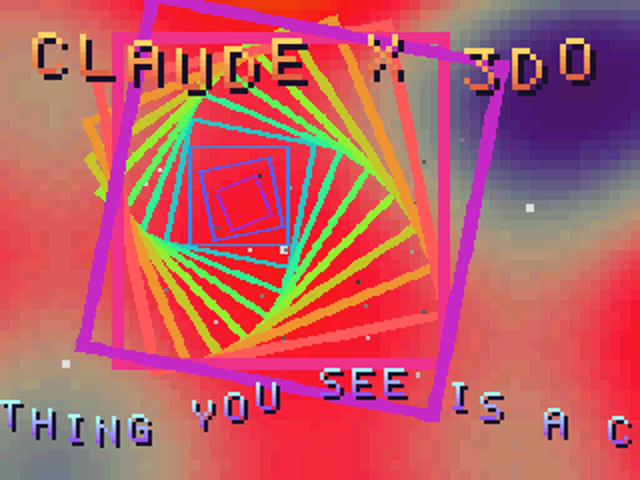
A demo (plasma, starfield, a rotating cel vortex, a bouncing title, and a sine scroller at 60 fps on an emulated 12.5 MHz ARM60) written, built, tested, and debugged entirely with the kit.
-
Eighteen Amiga games ported through an Amiga compatibility layer, plus three Unity games rebuilt for the 3DO cel engine (Planet Chomp, Spectral Keep, Rolling Steel), each on its own disc and all together on an arcade disc behind a menu.
How it is built
Shell and Docker wrap the toolchain and the emulator build; C on the 3DO side; Python for the test harness and the DevBench server. The emulator patch is what makes it scriptable: a GDB remote stub and a control API mean the same loop works for a person at the keyboard and for an agent.