A jar of flour and water raises a loaf with no packet of yeast. Follow it from the microbes in the starter, through temperature, time, water and gluten, to the oven — with the sourdough, bread and artisan-bread tools open beside the text.
Wire a car, van, truck or motorbike: cable size in mm² and AWG from the current, the round-trip length and the voltage drop you allow, with insulation rating, under-bonnet heat and bundling; the fuse that protects it; relay circuits drawn as schematics with the 30/85/86/87/87a pins and the flyback diode; crimp terminals and connectors; parked battery drain and the alternator's load; a second battery on a DC-DC charger; and the DIN 72552 terminal numbers.
A bake-day studio for bread: a library of about ninety breads from pain de campagne to injera, bagels and panettone — each with its formula, timed process, techniques, shaping and bake — a sourdough tab (starter types, a bulk-time model with the aliquot target, converting recipes to and from sourdough, rye sours, discard), braid, bagel, pretzel and pita drawings, hearth-style formulas from baguette to 100 % rye, preferments worked out from a straight dough (poolish, biga, pâte fermentée, levain, scalds) with their timing by temperature, a printable bake-day plan with fold timers and an aliquot-jar bulk target, shaping and scoring drawings, steam and oven set-ups, crumb troubleshooting and a flour guide.
Classic baking ratios by weight as sliders that give the whole recipe in grams for any batch, with what each ingredient does and what pushing it changes; substitutions for eggs, dairy, sugars, fats, chocolate, flours, leaveners and yeast with their adjustments; high-altitude changes by elevation; and a check of the baking powder, soda and acid in a recipe.
A catalogue of the books you own, made for a phone at the shelf or in a bookshop — scan barcodes (a whole shelf at a time), look books up at Open Library and Google Books, sort them onto rooms, bookcases and shelves, track reading, loans and a wishlist, ask "do I own this?" in a shop, and sync phone and computer by file or through your own GitHub gist.
Move a cake recipe to another pan shape or size by batter volume — with the fill depth, a bake time scaled from the batter's thickness, the oven temperature and doneness tests — and plan layer and tiered cakes, frosting, filling and ganache, with a table of standard US and metric pans.
Draw a tree of gas pipe sections and appliances and get a size for every section — natural gas or propane, schedule 40 steel, CSST, copper or polyethylene, at the usual supply pressures, by the longest-length or branch-length method — computed from the IFGC/NFPA 54 sizing equations and held at or under the code's tables, with the pressure left at each appliance and a capacity table laid out like the code's.
Tick the bottles and ingredients you have and see which of 200-odd classic, tiki, low-ABV and alcohol-free drinks you can make now and which are one or two away; rank the next bottle by how many drinks it unlocks; scale or party-batch any drink with dilution water, with its strength in standard drinks; syrup recipes, favourites and notes.
Plan laminated doughs — croissant, pain au chocolat, Danish and puff — with the butter block and détrempe, each fold's roll size and the layers drawn, butter temperatures and croissant cutting sizes; process cards for choux, meringues, custards, curd and caramel; sugar stages at your altitude with an Italian meringue syrup planner; chocolate tempering curves with a step timer; and shortcrust sized to your tart tin.
Pipefitting arithmetic: set, run and travel for 11¼° to 90° offsets, rolling offsets drawn as a box, parallel pipes through an offset or round a corner, cut lengths from centre-to-centre measurements less fitting takeoffs (copper, PVC/ABS DWV, threaded steel, PEX), drain slope over a run, and the volume and weight of a pipe full of water — in inches to 1/16 with millimetres.
Size a thermal expansion tank from the heater volume, temperatures and pressures; a well pressure tank for a minimum pump run time; a well pump's total dynamic head with its curve against the system curve; a hot-water recirculation pump's flow and head from the loop's heat loss; water-heater recovery and a rough first-hour figure for gas, electric and heat-pump heaters; and a tankless heater from flow and temperature rise.
Workshop sums for small petrol engines and more: two-stroke fuel mix in litres, gallons and fluid ounces; antifreeze strength and freezing point for ethylene and propylene glycol, and how much to drain to get there; rejetting a carburettor for altitude and temperature by air density; reading spark plugs and a compression test; identifying chainsaw chain by pitch, gauge and drive links; mower blade tip speed and belt length; displacement and power; and a seasonal maintenance and winter storage checklist.
A log for your cars, vans and motorbikes: fuel-ups with economy worked out properly across partial fills (mpg US or UK, L/100 km, km/L), EV charging sessions and mi/kWh, service reminders by distance and time with overdue alerts, repairs and parts, cost of ownership per mile or km with charts — plus a VIN decoder (check digit, model year, maker, and an NHTSA vPIC lookup), JSON backup and CSV import and export.
Any scale or mode in any key on a piano and a guitar fretboard (any tuning, left-handed, CAGED and three-notes-per-string patterns), the key's chords with Roman numerals and functions, a chord namer that handles inversions and slash chords, guitar voicings found and scored for playability, the circle of fifths, common progressions to play along to, and a transposer and capo helper.
Plan a tiled floor or wall to scale — straight, ½ or ⅓ offset, herringbone or diagonal — with the layout shifted to avoid slivers, every cut size, the starting lines to snap, tiles and boxes, thinset and grout; plus drywall sheets chosen for the fewest butt joints with screws, mud and tape, paint by surface and coat, and plank or sheet flooring.
How long a charge takes and what it costs — Level 1, Level 2 or DC fast with a taper curve, the car's on-board charger limit, losses, flat or time-of-use prices — the range it adds per hour, the cost per mile against petrol, and the home charger circuit: 125 % breaker, wire size and receptacle under NEC 2023.
Every solar and lunar eclipse from 2020 to 2050 with its times and how much you'll see from your place — contacts, magnitude, obscuration, the path of totality on a world map — and the meteor showers of the IMO list, with the rate you can expect tonight after the radiant's height, your sky and the moon.
Displacement from bore, stroke and cylinders; static and dynamic compression from the chamber, gasket, deck, piston and the cam's intake closing; rod ratio and piston speed; airflow and horsepower–torque; and gearing — speed at rpm in every gear with a shift chart, rpm at cruise, and which final drive to pick.
Roof pitch ↔ angle ↔ rise/run; common, hip, valley and jack rafters with the birdsmouth, ridge reduction and speed-square marks drawn to scale; gable studs; rafter, ceiling-joist and header sizes from the IRC span tables; a stud-by-stud wall take-off with headers; and shingles, sheathing, underlayment, drip edge and ridge cap for the roof.
List what must run in an outage — fridge, well and sump pumps, furnace, AC and heat pump by tonnage, EV charger, lights, tools — with running watts and starting surge from the code letter or locked-rotor amps (and soft starters); find the start order with the lowest peak, the generator size after derating for altitude, heat and fuel, fuel per hour and runtime from your tank, leg balance, and what NEC 702 asks of the transfer switch.
Airflow from heating and cooling loads, room airflow in proportion to room loads (imported from the heat-loss tool if you like), trunk-and-branch duct sizing by the equal-friction method in the manner of Manual D, round and rectangular sizes, velocities, registers and grilles, the static-pressure budget and a fan-curve check — with the layout drawn.
Tune a guitar, bass, ukulele, violin, cello, mandolin or banjo with your phone or computer's microphone — automatic string detection in standard and alternate tunings, a cents needle and a strobe, a steadiness meter, A4 from 415 to 466 Hz, historical temperaments for harpsichord and organ, and reference tones.
Plug an ELM327 adapter into the car and read it from the browser over Bluetooth LE or USB — live gauges and graphs with CSV logging, stored, pending and permanent trouble codes with descriptions, the freeze frame, readiness monitors, the VIN, and clearing codes — or try it all on a simulated car.
Learn songs on the piano or guitar: notes fall onto a keyboard with finger numbers and the staff scrolls along, or the song appears as tab, on a fretboard and as chord charts with a strumming pattern. Watch it, let it wait for you, or play along and get scored — with a MIDI keyboard, the computer keys, touch, or the microphone — and import your own MIDI and MusicXML files.
Conjunctions of planets with each other, the Moon and bright stars, planet "parades", oppositions, greatest elongations, stations and retrograde loops, Mars's closest approach and lunar occultations — for the next year or twenty, filtered to what you can actually see from your place, each with a picture of the sky at the best moment and an .ics file for your calendar.
Size drains, stacks and building drains from drainage fixture units, vents by developed length, trap arms, drain slope, water supply pipe from fixture units (Hunter's curves, Hazen–Williams loss and the available-pressure method) and the water heater — by the 2021 IPC or the 2021 UPC, with each table cited.
Convert between the Bortle class, sky brightness in mag/arcsec² (an SQM reading), naked-eye limiting magnitude and how much brighter than natural your sky is; see what each class shows and a simulated star field at that darkness; and estimate tonight's limiting magnitude by altitude with the Moon up.
A star chart for your place and time — the whole sky as a dome or a zoomable view, with stars to magnitude 6.5, constellations, the Milky Way, Messier objects, the planets and the Moon's phase; a time slider, search, rise/transit/set for anything you tap, a red night mode, and a mode that shows what your phone is pointing at.
Compare two car tyre sizes — metric, P- and LT-metric, or flotation like 33x12.50R15 — for diameter, width, sidewall and revs per mile, see the speedometer error at each speed and the ride-height change, draw them to scale, check rim widths, and work out wheel offset, backspacing, poke and inner clearance.
Connect several Bluetooth sensors at once — heart-rate straps, power meters, speed and cadence sensors, running pods, smart trainers, thermometers, Xiaomi LYWSD03MMC, scales — with big live numbers and graphs, one timeline logged in the browser and exported as CSV, and ERG workouts and free rides on an FTMS trainer.
Plan a smoker cook: meats and weights give estimated cook-time ranges at your pit temperature (rules of thumb — the probe decides), the stall and when to wrap, rest and hold; a timeline worked back from dinner across all the meats and the smoker's space; live alarms; and the USDA FSIS safe temperatures kept apart from quality targets like 203 °F brisket.
Coffee-to-water ratios per brewing method, a recipe timer that calls out each pour with the weight the scale should read, and the extraction yield from a TDS reading, plotted on the SCA brewing control chart with brew-ratio lines.
Import your smart-meter data (Green Button XML or CSV, Octopus, Home Assistant, or any interval CSV) in the browser; see every hour as a heatmap, daily and monthly use, baseload and peaks; price it on flat, tiered and time-of-use tariffs you can edit; and try an EV, a heat pump, solar and a battery against your own hours.
Salt by weight for a ferment three ways — % of the vegetables (dry-salted kraut), % of the brine, or % of everything including the water — with the NCHFP's tested sauerkraut and dill-pickle proportions as percentages, NCHFP fermentation times by temperature with calendar check-ins, and a batch log of pH readings against the 4.6 line.
Film + developer + dilution + EI → development time from Ilford and Kodak datasheets, corrected for temperature and continuous agitation, with push and pull; your own combinations; and a step timer for pre-soak, developer with agitation prompts, stop, fix and the Ilford wash, with sound and vibration — plus C-41 and E-6.
Frost dates (yours, or NOAA normals for a city), a sowing calendar for each crop from an extension-service planting guide — start indoors, transplant, sow, fall sowing, harvest — succession sowings, square-foot beds with plant counts, companion hints labelled evidence or folklore, and a printable plan, kept in your browser.
A room-by-room heat-loss and cooling-load estimate in the style of Manual J (not Manual J): U- or R-values and areas, air leakage, design temperatures for a few US cities with sources, window solar gain from the sun's position, and heat-pump sizing with the balance point — in imperial or metric.
Tested home-canning processes only: pick a product from the USDA Complete Guide to Home Canning as published by the NCHFP, your canner (boiling water, dial or weighted gauge), jar, pack and elevation, and read the process time and pressure exactly as published — with the whole table, the recipe's own page, and plain warnings about untested recipes and low-acid foods in boiling water.
All-grain and extract beer recipes: OG, FG and ABV, IBU by Tinseth or Rager, colour by Morey with a swatch, mash and sparge volumes and strike temperature, efficiency and attenuation from your readings, priming sugar and keg pressure, and brewing-salt additions toward a water profile with an approximate mash pH.
Plan a VFR cross-country: waypoints from airport codes, coordinates or a tap on the map; great-circle course and distance; magnetic variation from the World Magnetic Model; winds aloft per leg (typed or the US forecast from aviationweather.gov); wind correction angle, true and magnetic heading, ground speed, time and fuel per leg with climb, descent, taxi and reserve; checkpoints; and a printable kneeboard nav log.
Pixels ↔ print size at any ppi; the resolution the eye can use at a viewing distance (1 arcminute acuity); a photo cropped to a paper's shape with an overlay on your own image; how much upscaling a print needs; and mat window, borders and the standard frame that fits.
Event duration ↔ clip length ↔ interval at your frame rate; frames, card space and batteries; shutter angle and the ND filter for natural motion blur; and a day-to-night exposure ramp laid over the real sunset and twilight times for a place and date.
Weight and balance for your own aircraft: a profile with empty weight and arm, loading stations, fuel tanks and normal/utility CG envelopes, kept in your browser with JSON export; zero-fuel, take-off and landing weight and CG on the envelope with the fuel burn line and every limit checked; lb/in, kg/mm or kg/m; a printable sheet. Examples for the Cessna 172S, Piper Archer III and Cirrus SR22.
Great-circle distance, initial and final course, and midpoint between airports; multi-leg routes drawn on a map across the date line; a flight-time estimate by aircraft type; a per-passenger CO₂ estimate; and an airport lookup with runways and elevation.
Fetch METARs and TAFs by station or for airports near you, or paste them, and read them in plain English — wind and gusts, visibility, RVR, weather, cloud and ceiling, temperature, altimeter, remarks, and TAF FM/BECMG/TEMPO/PROB groups on a timeline — with VFR/MVFR/IFR/LIFR colours, runway crosswind, and density altitude.
Gear inches, development, gain ratio and speed at any cadence for chainrings × cassette (or an internal hub) on your wheel and tyre; compare two drivetrains gear by gear with their steps; cross-chaining warnings; and a chain-length estimate.
A wear and service log for your bikes: parts with install date and distance, rides typed in or imported from GPX, FIT or CSV, reminders by distance and time, chain-stretch checks against the 0.5% / 0.75% rule, service history and costs — kept in your browser, with JSON backup.
Starting front and rear tyre pressures from your weight, the bike, the weight split, tyre width, construction and surface — from Frank Berto's 15% tyre-drop measurements, with every step of the working shown and the rim and tyre limits applied.
Write a bread formula in baker's percentages and get grams for any number and size of loaves, with the true hydration (counting the levain and the water in milk, eggs and butter), yeast conversions and a time-and-temperature rule of thumb, and the water temperature for your desired dough temperature.
Dry cures and equilibrium brines by weight: Cure #1 or Cure #2 dosed to a nitrite target in ppm and never above the US limit for the product, salt and sugar by weight with the salt in the cure subtracted, presets for bacon, ham, corned beef, pastrami, sausage, dry-cured whole muscle and gravlax — plus plain brines by strength — with safety notes and sources.
Power for a speed and speed for a power — with position (CdA), surface (Crr), gradient, wind, air density from altitude and temperature, and drivetrain loss; the time for a climb, VAM and W/kg; energy; and Coggan power and heart-rate training zones from FTP and LTHR.
Depth of field with near and far limits, hyperfocal distance and a diagram; circle of confusion by sensor from phones to 4×5; two set-ups side by side; field of view and framing; equivalent focal length, aperture and ISO across formats; megapixels for a print; diffraction against pixel pitch; and macro with extension tubes.
The flight computer on your phone: wind triangle and wind finding, runway crosswind, pressure and density altitude, true airspeed and Mach, time/speed/distance and fuel with reserves, climb and descent planning, weight and balance with a CG envelope chart, glide range, and unit conversions. Not for navigation.
Drop a folder of photos — JPEG, HEIC, DNG or camera RAW — and see which focal lengths, apertures, shutter speeds and ISOs you really use, which lenses and cameras, and when you shoot; export the table as CSV. Read in your browser; nothing is uploaded.
The exposure triangle with EV at ISO 100 — lock any two of aperture, shutter and ISO and see the third — plus stops arithmetic in ⅓ and ½ stops, Sunny 16 and a light-level table, ND filters with a long-exposure countdown, reciprocity failure for film, and the shutter speed that freezes a moving subject or a shaky hand.
Guide number, distance, aperture and ISO solved from any three; flash power in ⅓ stops from 1/1 to 1/128; inverse-square falloff to the background; several flashes together; the light lost to high-speed sync, with flash balanced against the ambient; and key:fill lighting ratios, softbox size and distance, and a top-down diagram of where the lights go.
Live aircraft near you or any airport — on a map or an offline radar scope, in a sortable table, and as an "overhead now" list — from public ADS-B feeds or your own receiver's aircraft.json, with trails, altitude colours, emergency-squawk alerts and a watchlist.
Cups and spoons to grams by ingredient from a cited density table (with Diamond Crystal, Morton kosher and table salt kept apart), oven temperatures in °C, °F, gas mark and fan, sugar stages, butter sticks, egg sizes in the US, EU/UK and Canada, and pan areas and volumes.
A sequential lens design bench: build a prescription of spherical and conic surfaces in N-BK7, N-SF11, F2, N-SK16, fused silica, CaF₂ and plastics (Sellmeier data), trace paraxial and real rays, get the cardinal points, Seidel aberrations and longitudinal colour, spot diagrams, ray fans and an MTF estimate, bend a singlet, design an achromatic doublet, and export the prescription as CSV or JSON — with a full-screen layout.
List the dishes with their prep, cook and rest steps and oven temperatures, say when to serve, and get a timeline of when to start each step — with oven-clash hints and preheat reminders — then run it live with alarms, notifications and the screen kept on. Plans are saved in your browser, with JSON export and import.
The longest shutter speed for pinpoint stars — the 500 rule against the NPF rule, from your sensor's pixel pitch, aperture, focal length and where you point — a star-trail planner (frames, gaps, total time, arc swept, card space), and when the Milky Way's core is up in a dark sky, tonight and through the year.
Pizza dough for any number of balls or pans by style — Neapolitan, New York, Detroit, Roman tonda and teglia — with hydration, salt, oil and sugar, the yeast worked out for same-day, 24-hour or 48–72-hour cold fermentation, an optional poolish or biga, and oven notes.
"What's that plane?" — point your phone at the sky and see the aircraft labelled where they are, with callsign, type, altitude and distance, using your location, the phone's compass and tilt, and optionally the camera; a sky plot and a list work everywhere else.
Feed a sourdough starter at any ratio, build exactly the levain a recipe needs (counting the starter's own water), estimate when it will peak at your kitchen's temperature — calibrated to your starter — and plan bake day backwards from when the loaf goes in the oven, with a printable timeline, calendar file and reminders.
Doneness and USDA safe temperatures; sous-vide heating, pasteurisation and cooling times by thickness from Douglas Baldwin's published tables; FDA and FSIS core-temperature hold times; and roasting time estimates from the USDA FSIS timetables, with carry-over cooking — and the thermometer as the judge.
Spoke lengths for each side of a wheel from the rim's ERD, the hub's flange diameters and centre-to-flange distances, spoke count, lacing and hole size — with rounding advice, bracing angles, the left/right tension ratio, rim offset, and an ERD-from-measurement helper.
Plan the light for a place and date: sunrise and sunset, golden and blue hour, civil, nautical and astronomical twilight, the sun's azimuth and elevation through the day, and moonrise, moonset, phase and illumination — with a day chart and a sky compass, in the place's own time zone.
Telescope and eyepiece arithmetic (magnification, focal ratio, exit pupil, true field, useful power, Dawes and Rayleigh limits, limiting magnitude, Barlows and reducers), a camera on a telescope (arcseconds per pixel and sampling), binoculars, an interactive ray-tracing bench where you drag lenses and mirrors and watch images form, the lensmaker's equation and Snell's law with total internal reflection.
A private work log and task list in your browser — tasks nested as deep as you like with due dates, effort and recurring rules, a timestamped journal, timers and timesheets that roll up by project, and a “what’s on my plate” view — with quick-add typing, undo, and JSON, Markdown and CSV import and export.
Photograph a wall, then lay pictures, a TV, a shelf, or a photo of furniture over it — moved, scaled, pinned by four corners onto an angled wall, or placed at its true size by measuring against a sheet of paper or a door in the shot.
Resize, crop, rotate, and re-encode images as JPEG, PNG, WebP, or AVIF with a before-and-after comparison; strip EXIF; extract a palette; and build favicon and app-icon sets.
Loan and mortgage payments with a full amortisation schedule and chart, extra and lump-sum payments, refinance break-even, affordability by debt-to-income ratio, and APR with fees.
Write your résumé in Markdown, see it typeset live in five themes on A4 or Letter, and print it to PDF or save it as HTML, plain text, Markdown, or JSON Resume.
ffmpeg compiled to WebAssembly, in your browser — convert, trim, crop, resize, rotate, re-time and watermark video; make GIFs and animated WebP; extract audio; split video into frames or build video from images; join clips; or run any ffmpeg command.
Read text from photos, screenshots, scans and PDFs with Tesseract compiled to WebAssembly — clean up the image (threshold, deskew, upscale), pick a region, see every word's confidence, and export text, hOCR, TSV or JSON.
Paste any recipe and scale it by servings, a factor, a pan size, or the amount of one ingredient you have; convert between US and metric, cups to grams; and see baker's percentages and dough hydration.
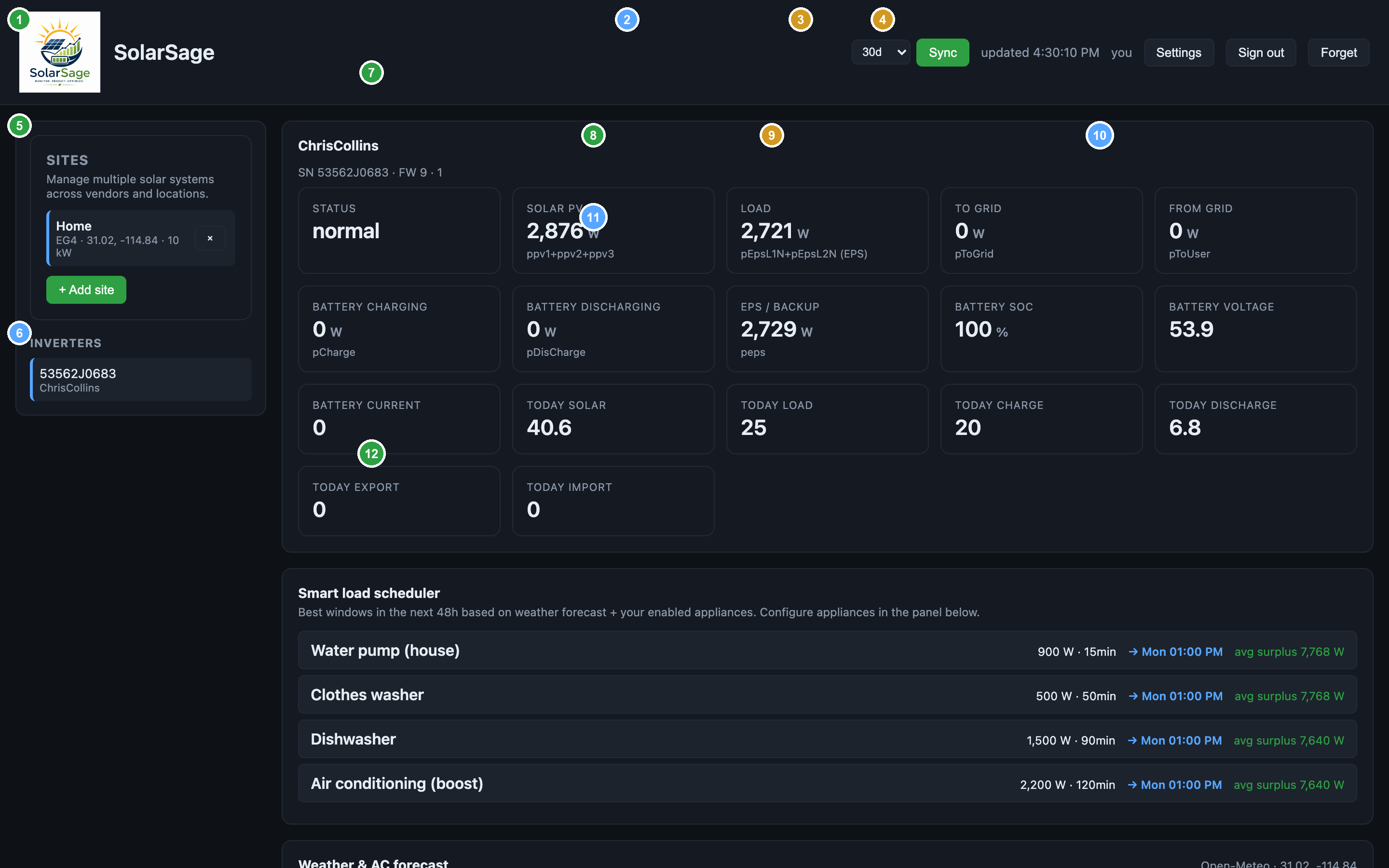
Size a rooftop solar system from your electricity use and location, then see payback, NPV, IRR, the cost per kWh of solar energy, financing, and a year-by-year cash flow over its life.
A talk timer for a list of talking points — each with its own Markdown notes and time, adding up to the length of the talk, run point by point from any starting point — plus a Pomodoro timer with a session log, named countdowns, a stopwatch with laps, and an interval timer for Tabata and HIIT.